
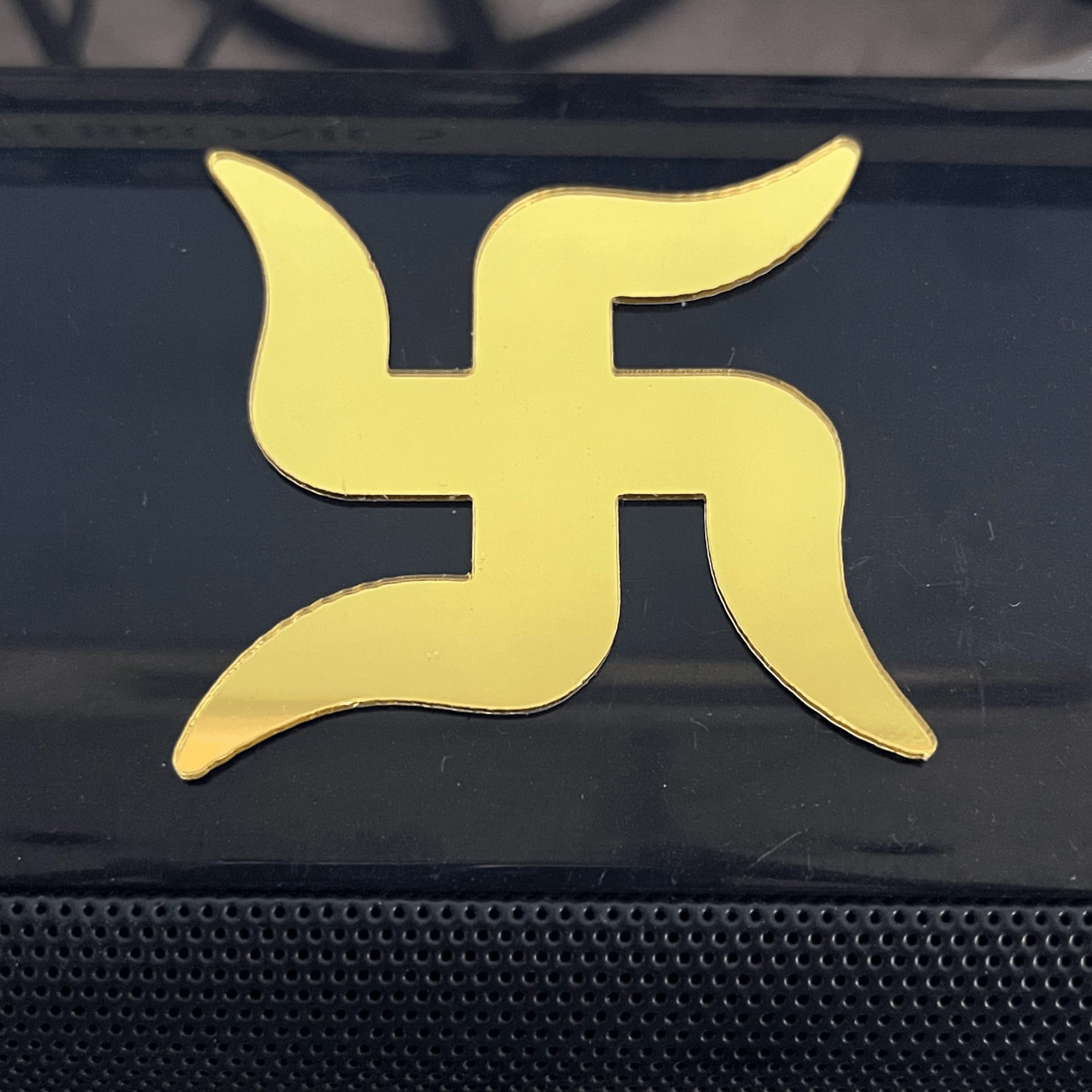
Walk past almost any Indian home during Diwali and you will see Shubh Labh written beside the door, a Swastik above it and often small footprints leading inside. These symbols are so familiar that we rarely stop to ask what they mean or why they are placed where they are.
This guide explains the traditional meaning of the most common auspicious symbols and where families usually place them. Customs differ between regions and communities, so treat this as a general guide and follow your family's tradition.
Shubh Labh
Shubh means auspiciousness or goodness, and Labh means gain or profit. In many traditions, Shubh and Labh are considered the sons of Lord Ganesha, and Riddhi and Siddhi are his consorts.
- ✦Where to place it: on either side of the main entrance — Shubh on one side and Labh on the other — or on the door of a shop or office.
- ✦When: most families put up fresh Shubh Labh before Diwali, especially on Dhanteras, and in businesses at the start of the new financial year.
- ✦Why it matters: it expresses the wish that whatever enters the home brings both goodness and prosperity.
Swastik
The word Swastik comes from Sanskrit and is commonly understood as 'that which brings well-being'. It is one of the oldest auspicious symbols in Hindu and Jain traditions.
- ✦Where to place it: above or beside the main door, at the entrance of the pooja room, or on the first page of new account books.
- ✦It is often drawn with kumkum or sindoor during pujas and placed as permanent décor at the entrance.
Kalash
The Kalash — a pot topped with mango leaves and a coconut — symbolises abundance and is used to begin almost every Hindu ritual, from griha pravesh to weddings.
- ✦Where to place it: at the entrance or in the mandir. A decorative Kalash cutout keeps the symbol present all year without needing fresh leaves.
Lakshmi Charan Paduka (Lakshmi's footprints)
Footprints of Goddess Lakshmi are placed at the entrance, pointing inward, as a welcome for her on Diwali night.
- ✦Where to place them: at the threshold or just inside the main door, toes pointing into the home.
- ✦Many families also draw them with rice-flour paste or rangoli colours and keep a permanent pair as décor.
Om and Shree
Om is the sacred sound at the heart of Hindu prayer, and Shree is a name of Goddess Lakshmi associated with prosperity and grace.
- ✦Both suit the pooja room, the main door or the wall facing the entrance.
Choosing long-lasting symbols for your home
Painted and paper symbols fade after one season. Gold mirror-acrylic cutouts keep their shine, can be wiped clean and are easy to stick on doors and walls, so the symbols stay bright through every festival.
HM3Design's Divine Gold collection includes Shubh, Labh, Swastik, Om, Shree, Kalash, Lakshmi Charan Paduka, Riddhi Siddhi and many deity designs, made in Ahmedabad and delivered across India.